WORK IN VIEW
IMAGE
BECOMES
FIELD.
01 / 07
THE WORK
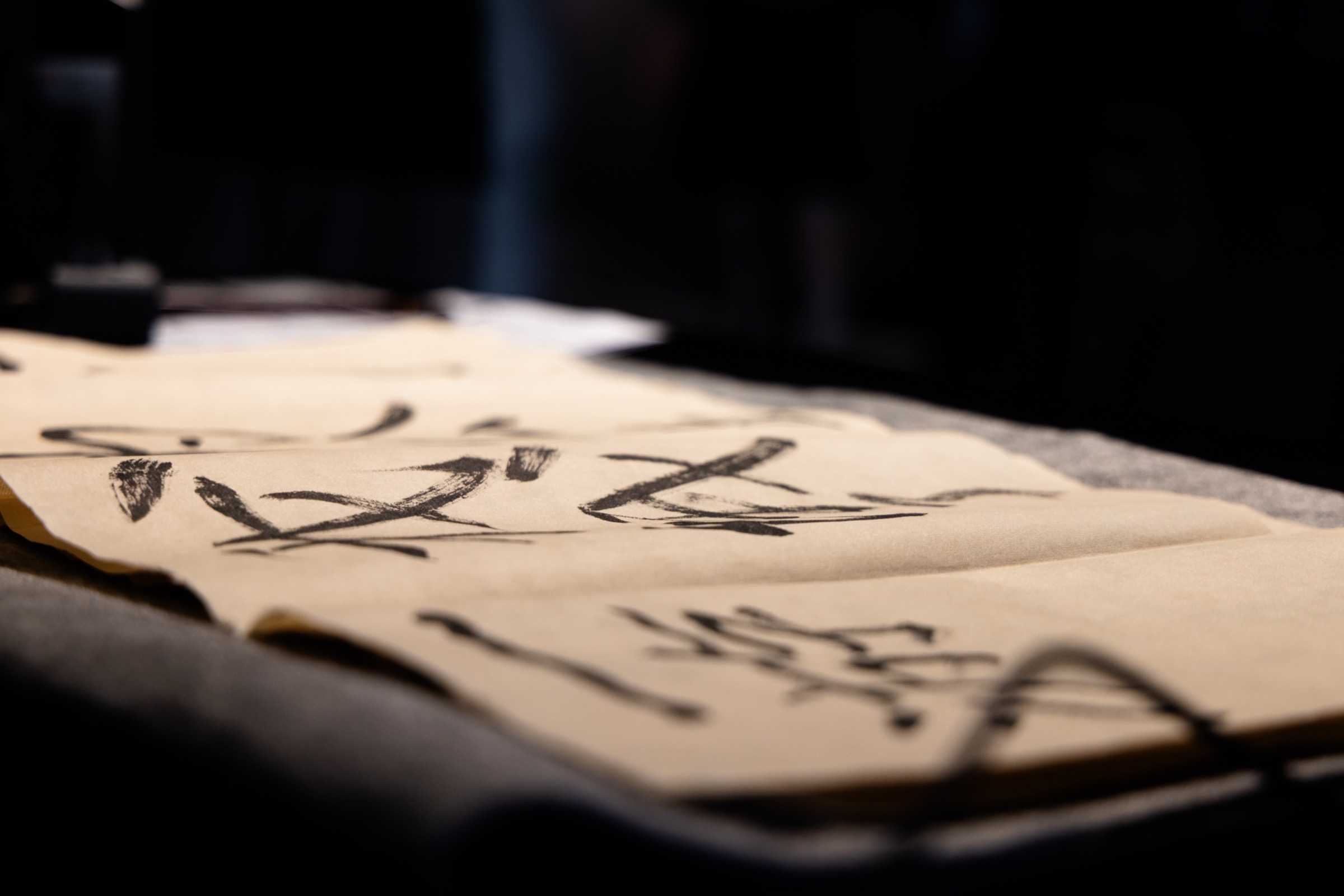
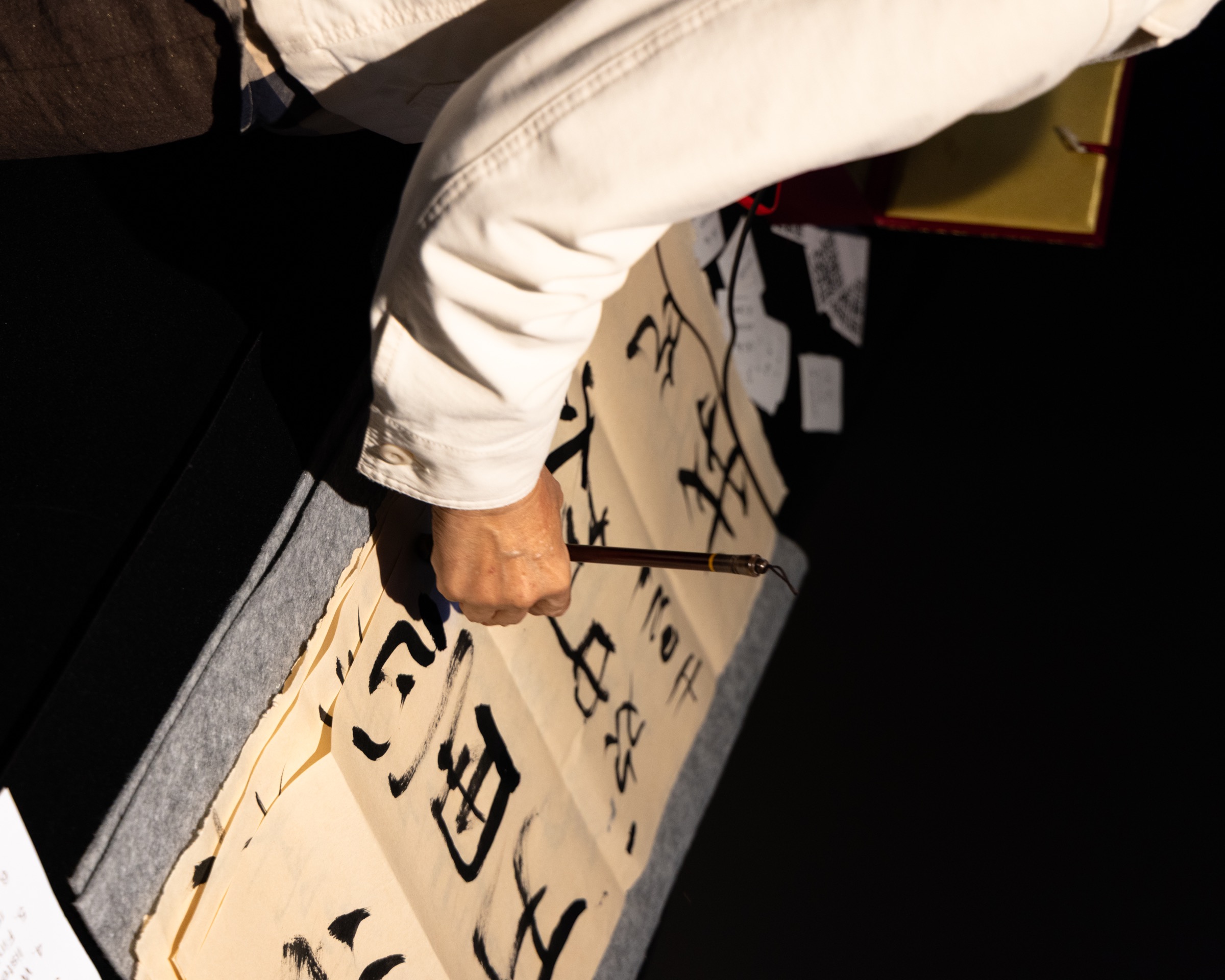
Chinese calligraphy is a temporal, embodied practice, yet it is almost always encountered as a silent, finished object. The micro-actions that constitute expertise—the approach, hesitation, turn and lift—are irretrievable from the final mark.
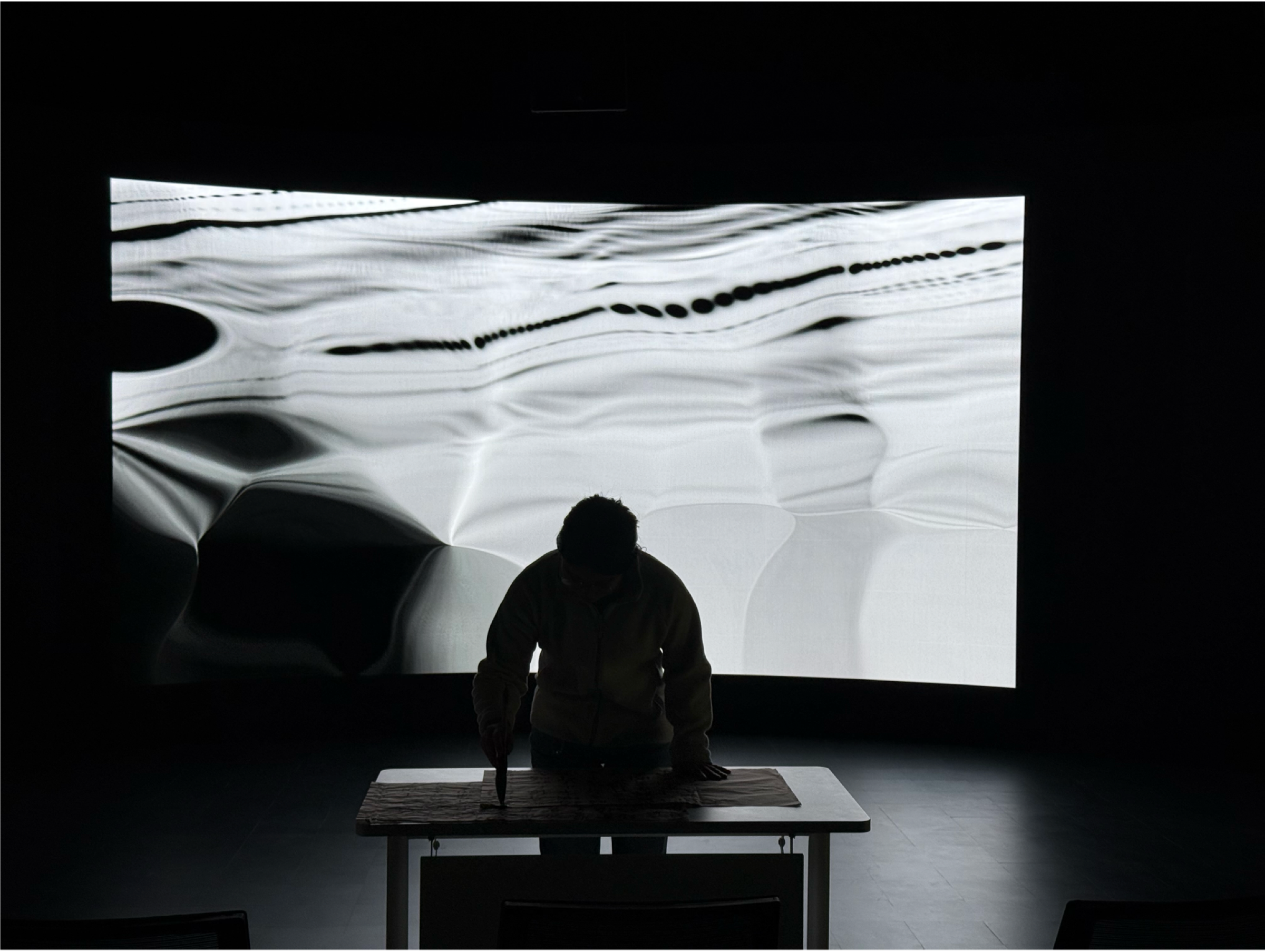
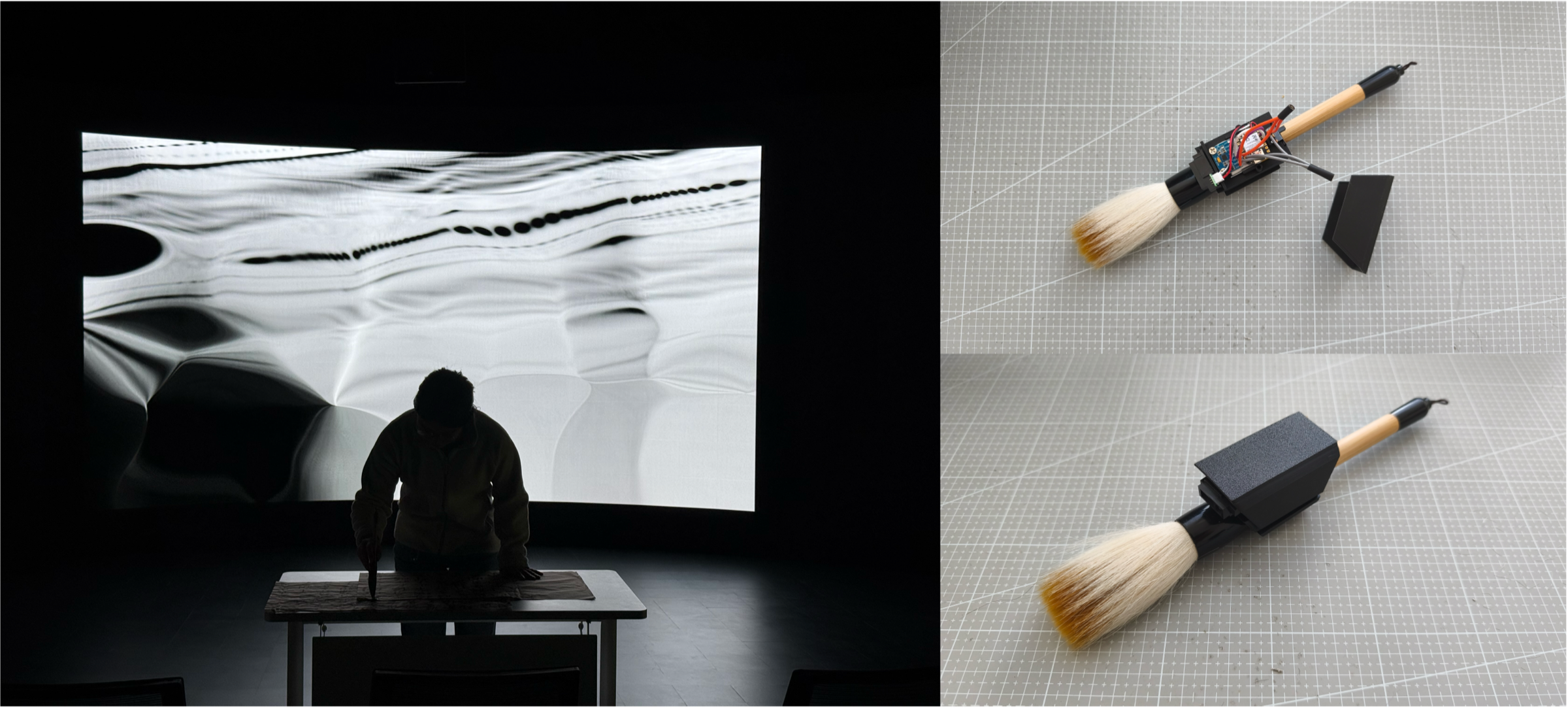
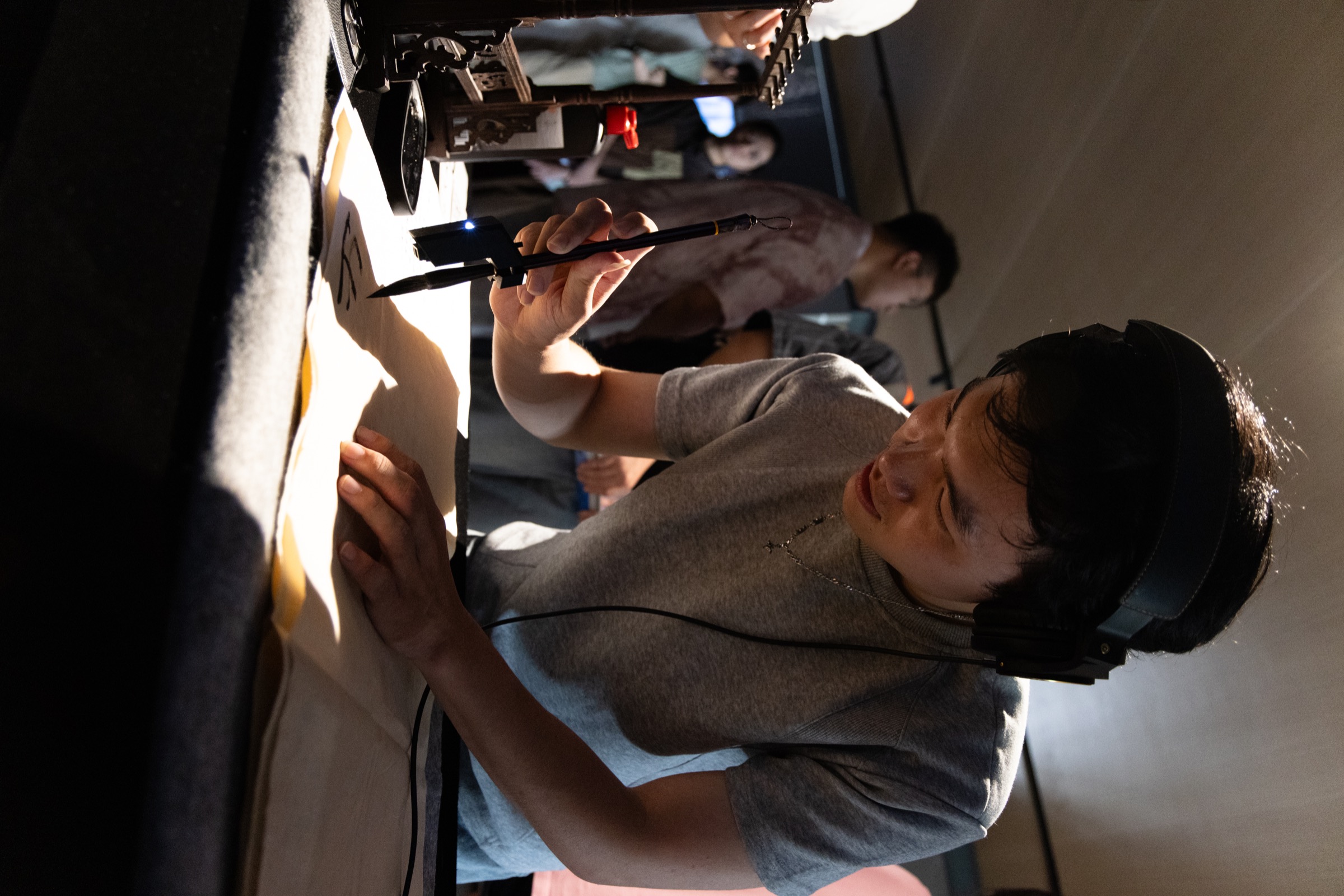
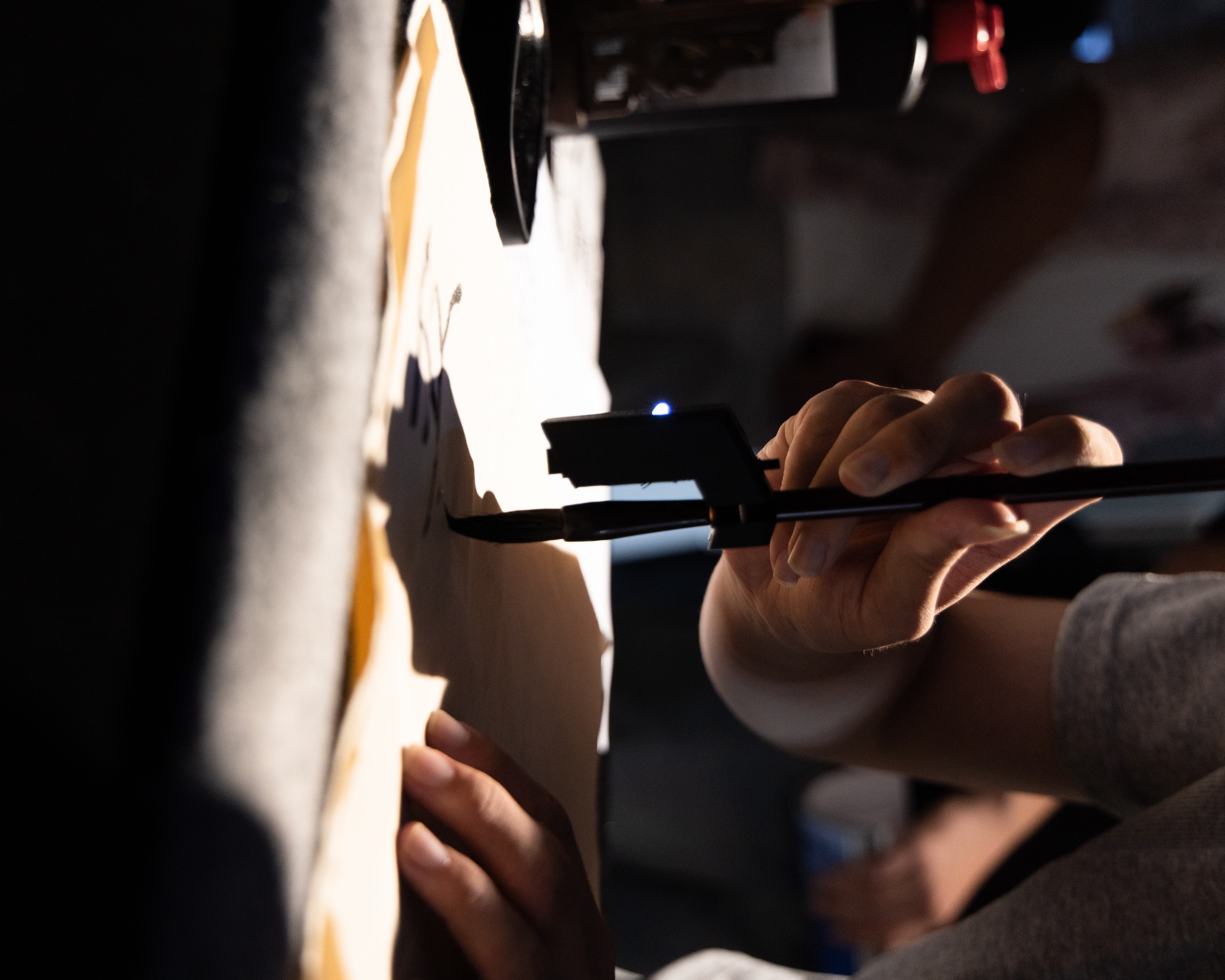
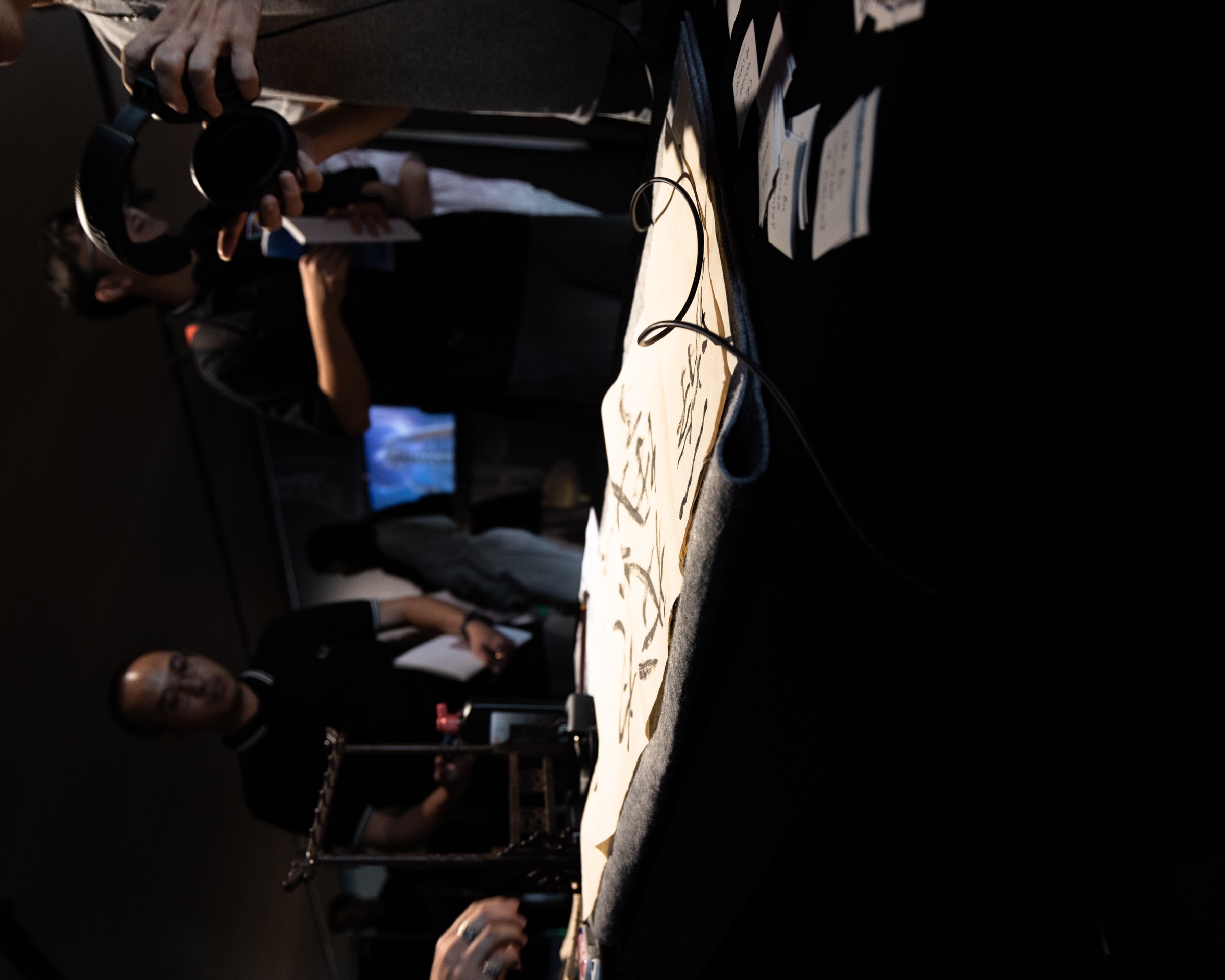
BruSHŪ proposes the instrumented brush as a cross-modal translation device. Embedded sensors capture orientation, motion energy and tip–surface proximity during writing; these signals are mapped in real time to sound and evolving visual texture.
The work functions as a perceptual lens, revealing rhythm, transition and tacit decision. The brush shifts from a tool for producing marks into an interface for sensing embodied knowledge.